MEET OUR TEAM
Office of The Center for Health Equity & Wellbeing Staff
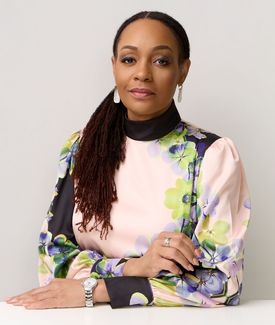
Denise Anderson, Ph.D., MPH
Inaugural Executive Director
Dr. Denise Anderson is the inaugural Executive Director of the Center for Health Equity & Wellbeing (CHEW–NJPHI), New Jersey’s Public Health Institute. She brings more than 15 years of experience across government, health systems, nonprofits, and academia, with a career focused on advancing health equity and strengthening public health systems. Her work spans community health, HIV prevention, emergency response, and cross-sector collaboration, grounded in a deep understanding of how housing, education, economic stability, and policy shape health.
Known for collaborative, community-centered leadership, Dr. Anderson brings people together to turn data, policy, and lived experience into practical solutions. Under her leadership, CHEW–NJPHI is launching place-based Health Opportunity Zones, strengthening civic engagement and policy partnerships, building a diverse public health workforce, and expanding the use of evidence-based prevention and care, so every New Jerseyan has a fair chance to be healthy.
Dr. Anderson holds a PhD and a Master of Public Health (MPH), with training grounded in urban health and systems thinking. She has been selected for several nationally and state-recognized leadership fellowships, including the CDC’s Public Health Prevention Specialist Fellowship, where she worked on community health and prevention initiatives. She is also an Eagleton Institute of Politics Fellow, where she interned with the New Jersey State Legislature, Office of Legislative Services, to better understand how policy is made and implemented. In addition, Dr. Anderson is a Yale Pozen–Commonwealth Fund Fellow in Health Equity Leadership at Yale University, where she continues to deepen her leadership and policy expertise
to advance equity-focused systems change.
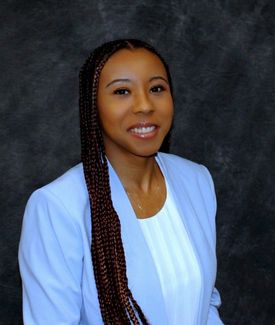
Darah Bagby-Prosser, MHS
Program Coordinator – Work Force
Darah Bagby-Prosser is a passionate environmental and public health advocate with a Bachelor of Science in Environmental Policy from Rutgers University’s School of Environmental and Biological Sciences and a Master of Health Science in Environmental Health from the Johns Hopkins Bloomberg School of Public Health. Her research explored how environmental conditions affect both physical and mental health in communities.
At CHEW–NJPHI, Darah serves as Program Coordinator for Public Health Infrastructure and Workforce Development and provides coordination support across all strategic impact areas. She is driven to support community development efforts that create healthier, more equitable environments, helping build the systems and workforce needed for communities across New
Jersey to thrive.
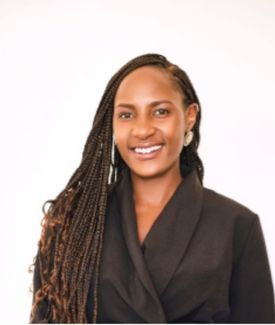
Consolata Mogeni, MPH
Program Manager – Research and Development
Consolata Mogeni is a dedicated health equity advocate with a bachelor’s degree in Biology and Public Health from Rutgers University and a master’s degree in Global Health from New York University. She brings experience designing and implementing public health programs across nutrition, research, workplace wellness, and COVID-19 mitigation.
At CHEW–NJPHI, Consolata leads the Democracy & Health impact area, guiding the institute’s civic engagement and public policy work, and overseeing the institute's data strategy and use. She is passionate about building sustainable, community-driven health initiatives, strengthening local partnerships, and using data-informed approaches to reduce health disparities and improve health outcomes across New Jersey.
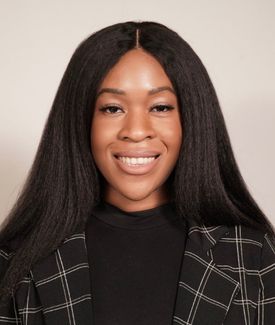
Adaobi Ndupu, MPH
Program Manager – Health Opportunity Zones
Adaobi Ndupu is a first-generation Nigerian American and a lifelong lover of science. She earned her bachelor’s degree in biology and public health from Rutgers University and her Master of Public Health from Drexel University. Adaobi brings experience leading and managing programs across the health, education, and social services sectors.
At CHEW–NJPHI, Adaobi leads the implementation and day-to-day management of the Health Opportunity Zones (HOZ) impact area, working closely with community partners to turn place-based strategies into action. She is deeply committed to health equity and justice, driven by a passion for supporting communities facing the greatest barriers to health, and advocates for solutions that address education, income, and social and structural inequities.